
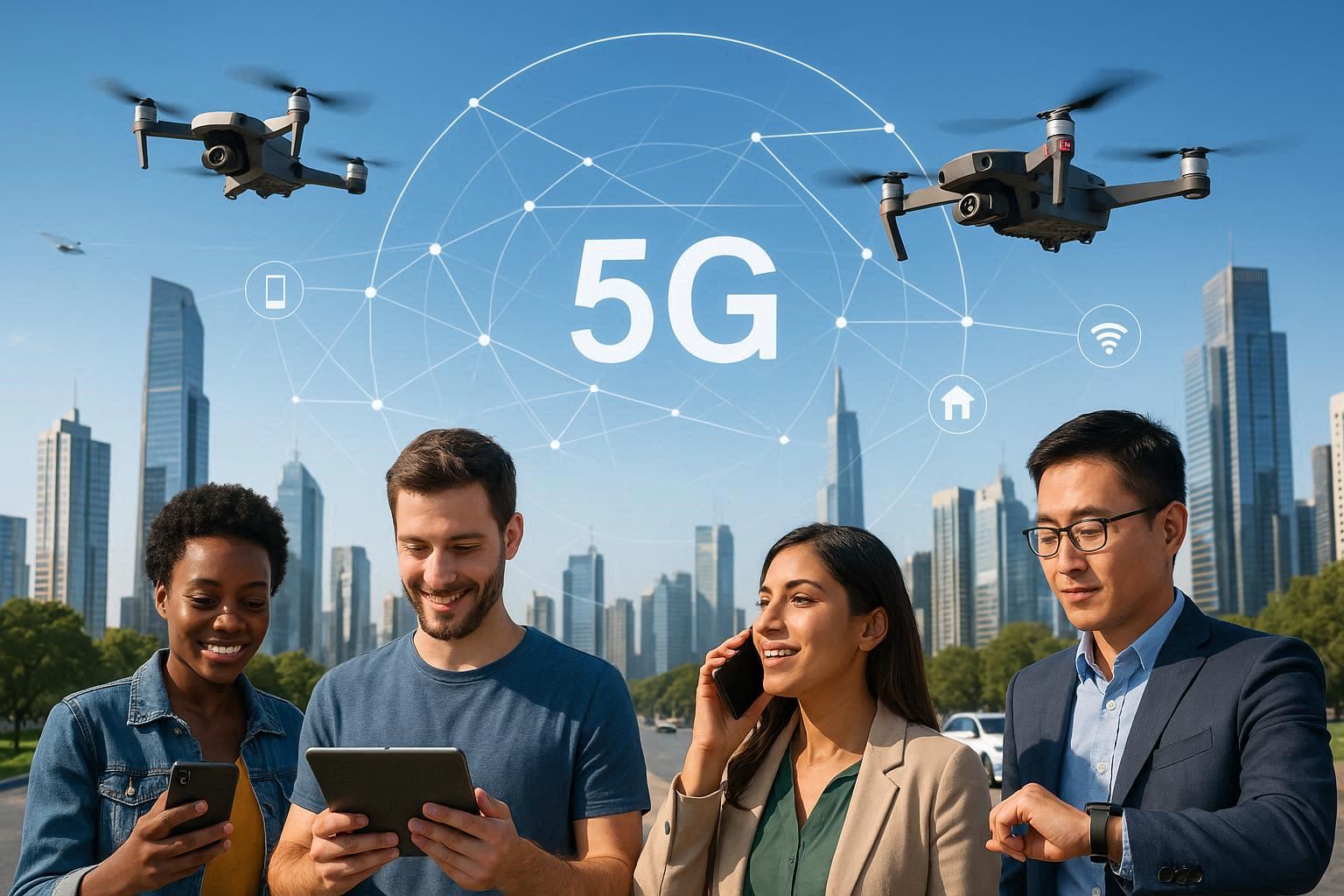
In 2025, the rollout of 5G technology is revolutionizing how the world connects. From faster data speeds and ultra-low latency to smarter cities and autonomous vehicles, 5G is unlocking new possibilities for businesses, governments, and individuals. But even as 5G networks continue to expand, researchers and innovators are already looking toward the next generation—6G and beyond—which promise to reshape the digital landscape even further.
This article explores the impact of 5G on global connectivity, its influence on various sectors, and how the next phase of wireless innovation will define the future of communication and economic growth.
1. Understanding 5G Technology
5G, or fifth-generation wireless technology, represents a major leap from previous mobile standards. It offers data speeds up to 100 times faster than 4G, along with ultra-low latency and the capacity to connect millions of devices simultaneously. These advancements make it ideal for powering technologies such as autonomous cars, Internet of Things (IoT) networks, and real-time cloud applications.
2. Transforming Industries Through Connectivity
5G is more than just faster internet—it’s a foundation for innovation across industries. In healthcare, remote surgeries and AI-assisted diagnostics rely on 5G’s low-latency connections. In manufacturing, smart factories use 5G-powered robotics and sensors for precision and automation. The logistics sector benefits from real-time tracking, while the entertainment industry delivers ultra-high-definition streaming and immersive augmented reality experiences.
3. Empowering Smart Cities
5G is enabling the rise of smart cities where infrastructure, transportation, and utilities are interconnected through data. Traffic lights communicate with vehicles, energy grids optimize consumption automatically, and public safety systems respond in real-time. These innovations are improving urban efficiency, sustainability, and quality of life for millions of people.
4. Boosting Global Economic Growth
According to economists, 5G could contribute trillions of dollars to the global economy by 2030. It supports new business models, enhances productivity, and creates opportunities for startups and digital entrepreneurs. The rollout of 5G networks also stimulates investment in infrastructure and creates new jobs in telecommunications, cybersecurity, and technology development.
5. The Rise of the Internet of Things (IoT)
With 5G, IoT is reaching its full potential. Billions of devices—from household appliances to industrial machinery—are now connected, sharing data instantly. This connectivity improves efficiency, safety, and convenience across all aspects of life. For example, smart homes can optimize energy use, while connected agriculture systems monitor soil health and weather conditions for better crop yields.
6. Challenges in 5G Implementation
Despite its promise, 5G faces challenges such as high deployment costs, spectrum regulation, and cybersecurity threats. Rural areas, in particular, still struggle with access due to the need for dense network infrastructure. Governments and telecom companies are working to bridge this digital divide to ensure that 5G benefits are distributed equitably across the globe.
7. Looking Ahead: 6G and Beyond
While 5G is still expanding, research into 6G has already begun. Expected to launch around 2030, 6G will deliver even higher data speeds, near-zero latency, and AI-driven network management. It could enable futuristic technologies such as holographic communication, real-time digital twins, and fully immersive metaverse experiences. Beyond 6G, scientists are exploring quantum networking, which could redefine secure global communication altogether.
8. The Social and Environmental Impact
5G and future wireless technologies will not only connect people but also support sustainability efforts. Smart grids, precision agriculture, and intelligent transportation systems reduce resource consumption and carbon emissions. However, managing electronic waste and ensuring energy-efficient networks will remain critical as global data demand continues to rise.
Conclusion
The impact of 5G and beyond extends far beyond faster downloads or smoother video calls. It is laying the foundation for a hyper-connected world where industries are more efficient, cities are smarter, and innovation happens faster than ever before. As we move toward 6G and beyond, global connectivity will become the backbone of digital transformation, empowering societies to thrive in an increasingly intelligent and sustainable future.