
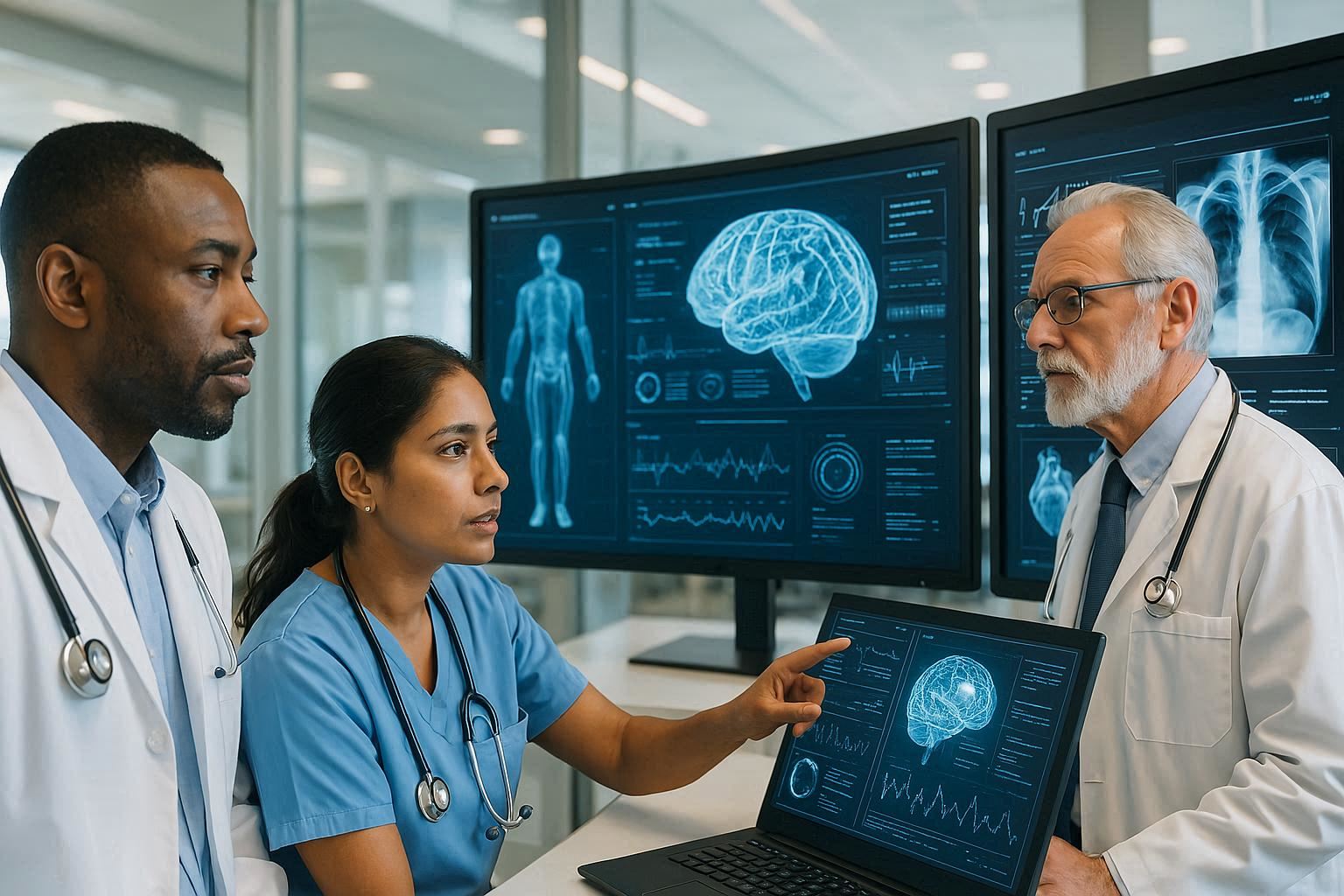
Artificial intelligence (AI) is revolutionizing healthcare. In 2025, AI-powered diagnostics have moved from research labs to everyday medical practice, helping doctors detect diseases faster, more accurately, and at lower costs. From analyzing X-rays to predicting genetic disorders, AI is becoming an indispensable partner in medicine. Yet, with this power comes responsibility—ethical use, data privacy, and human oversight are critical to ensure AI truly benefits patients.
1. The Role of AI in Modern Diagnostics
AI enables machines to process vast amounts of medical data and identify patterns that humans might miss. Using algorithms trained on millions of cases, AI systems can recognize early signs of disease, interpret imaging results, and even predict future health risks. This level of precision supports faster diagnosis, personalized treatment, and better patient outcomes.
2. How AI Works in Medical Imaging
Medical imaging is one of the fields most transformed by AI. Advanced algorithms can analyze CT scans, MRIs, and X-rays to detect conditions such as tumors, fractures, or internal bleeding in seconds. Radiologists use AI as a second opinion—one that never tires or overlooks subtle signs. This collaboration between human expertise and machine learning increases diagnostic accuracy and reduces human error.
3. AI in Pathology and Laboratory Testing
AI is making laboratory diagnostics faster and more reliable. Automated image analysis tools can detect cancer cells in biopsy samples, identify bacterial infections, and interpret complex genetic data. By streamlining laboratory workflows, AI reduces waiting times for results, allowing doctors to start treatment sooner and improve survival rates.
4. Predictive Analytics and Preventive Care
AI doesn’t just diagnose—it predicts. By analyzing patient histories, genetic data, and lifestyle factors, predictive algorithms can forecast the likelihood of developing certain diseases. This shift from reactive to preventive healthcare helps doctors intervene early, preventing complications and lowering healthcare costs in the long term.
5. Benefits of AI in Diagnostics
AI brings multiple advantages to modern medicine. It increases diagnostic accuracy, speeds up results, and reduces costs. In rural or underserved areas where specialists are scarce, AI tools can assist local clinicians remotely. Moreover, AI systems continuously learn and improve, leading to more consistent and reliable diagnoses over time.
6. Challenges and Ethical Considerations
Despite its promise, AI in healthcare faces major challenges. Data privacy and patient consent are ongoing concerns. Algorithms must be transparent and unbiased—trained on diverse datasets to avoid discrimination. Additionally, doctors must retain final decision-making authority, ensuring that AI supports rather than replaces human judgment. Ethical frameworks and strict regulations are essential to maintain trust in AI-driven healthcare.
7. The Human–AI Collaboration
The future of medical diagnostics is not about machines replacing doctors but empowering them. AI handles repetitive tasks and large data analysis, allowing physicians to focus on patient care, empathy, and complex decisions. This collaboration creates a balanced healthcare ecosystem where human intuition and machine precision work together for better outcomes.
8. Real-World Applications
Hospitals and research centers worldwide are already using AI to detect heart disease, lung cancer, diabetic retinopathy, and neurological disorders with impressive accuracy. For instance, AI-driven retinal scans can identify early signs of diabetes years before symptoms appear, and AI ECG analysis tools can detect heart conditions undetectable by standard tests. These innovations are saving lives every day.
9. The Future of AI-Driven Healthcare
By 2030, AI will be integrated into nearly every aspect of healthcare—from personalized treatments to robotic surgeries. Cloud-based AI platforms will allow real-time data sharing among hospitals, improving collaboration and global disease monitoring. With continued investment and regulation, AI promises a future where accurate, affordable, and accessible healthcare is available to all.
Conclusion
AI represents a new frontier in medical diagnostics, combining computational power with medical expertise to deliver faster, more precise, and preventive care. While challenges remain in ethics, regulation, and data protection, the benefits are undeniable. The collaboration between humans and AI will define the next era of healthcare—one where technology enhances human intelligence, not replaces it. As 2025 unfolds, AI continues to move medicine toward a future of smarter, safer, and more compassionate care.